


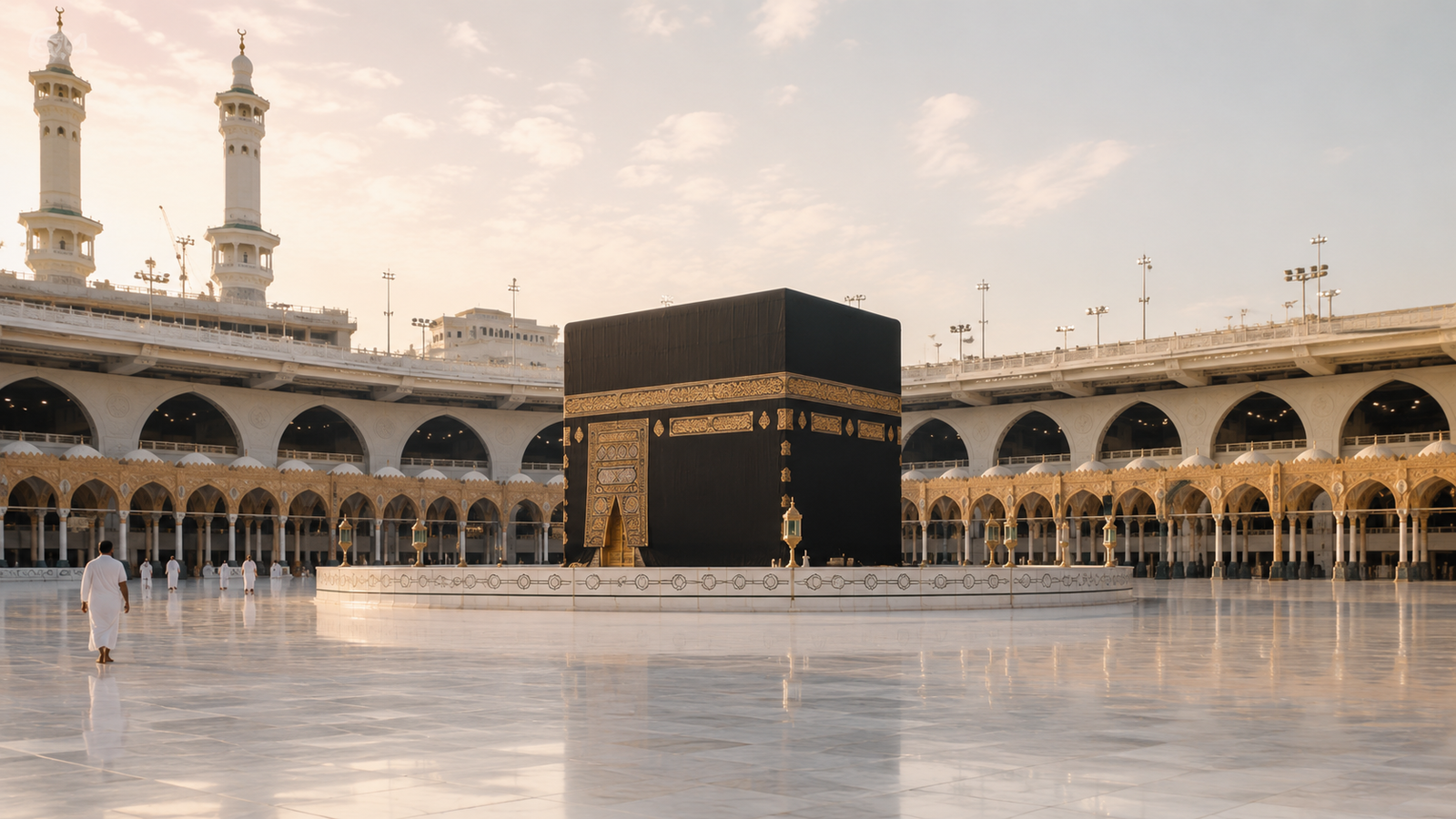
Performing Umrah for the first time is one of the most meaningful journeys a Muslim can undertake. It's natural to feel both anticipation and a quiet nervousness beforehand — you want every step to be done correctly, and you don't want the practicalities of travel to get in the way of what the journey is really about. The good news is that almost all of that uncertainty can be resolved before you even board your flight.
Here is what actually matters when preparing for your first Umrah.
Understand the sequence, not just the rules
Umrah follows a clear sequence: entering the state of Ihram at the Miqat, performing Tawaf (seven circuits around the Kaaba), performing Sa'i (walking seven times between Safa and Marwa), and finishing with Halq or Taqsir — shaving or trimming the hair. Reading about each step in advance, rather than trying to memorise long lists of rules, makes the actual experience far calmer. You do not need every dua to be word-perfect. The intention behind each action matters more than reciting from memory, and a knowledgeable guide beside you can gently correct anything you're unsure about, in the moment, rather than after it's too late to matter.
What to pack
Ihram cloths for men (two simple, unstitched white garments), and comfortable, modest, easy-to-remove clothing for women.
Sandals that don't cover the top of the foot, already broken in — you will be on your feet for hours.
Unscented toiletries. Perfume and scented products are not permitted once you are in the state of Ihram.
A small bag you can carry comfortably during Tawaf and Sa'i, for your phone, ID, and water.
A printed or downloaded copy of the key duas — even if you plan to rely on a guide, having your own copy is reassuring in quieter moments.
Prepare your body, not just your itinerary
Tawaf and Sa'i together cover several kilometres of walking, often in heat and in crowds. If you can, spend the weeks before your trip building up some walking stamina and wearing in your sandals properly. Pace yourself once you arrive — there is no need to rush between rituals, and short breaks for water are completely normal, not a sign that you're doing something wrong.
Know what genuinely surprises first-timers
Most of the anxiety around a first Umrah doesn't come from the rituals themselves — it comes from not knowing what the experience will actually feel like. A few things people rarely expect: how the Mataf area empties and refills around prayer times, how quickly the atmosphere shifts from a busy crowd to complete stillness during salah, and how emotionally overwhelming the first sight of the Kaaba can be, even for those who felt fully prepared. None of this needs to worry you in advance — it simply helps to know it's normal.
You don't have to work it out alone
This is where most of the anxiety around a first Umrah actually resolves itself — not through more research, but through having someone reliable beside you who can answer a question the moment it comes up, rather than after the fact. A private, verified guide means you're never left guessing whether you're standing in the right place, performing a step correctly, or missing something important, because there's always someone to ask.
Start preparing before you even land
The most useful preparation doesn't happen the night before your flight — it happens in the weeks leading up to it. From the moment you book with Hi Hijaz, your WhatsApp companion begins helping you prepare: what to pack, what to expect at each stage, and how to approach the rituals with confidence, so that by the time you arrive, very little feels unfamiliar.
Sort your logistics early
Aside from your Umrah visa and flights, check the calendar before you book. Ramadan and Dhul Hijjah are considered especially rewarding times to perform Umrah, but they're also the busiest — expect larger crowds and higher demand for guides and accommodation. If your schedule allows flexibility, travelling outside these peak periods often means a calmer, less crowded experience at the same holy sites.
A note on doing it right, and doing it fully
Getting Umrah right isn't only about the obligatory steps — the Sunnah includes a number of additional acts that aren't required, but are recommended and rewarded alongside them. This is exactly where a knowledgeable guide makes a difference: at every stage, your Hi Hijaz guide is trained to walk you through both what's obligatory and what's recommended, so nothing beneficial is missed and your Umrah is performed as correctly and as completely as possible.